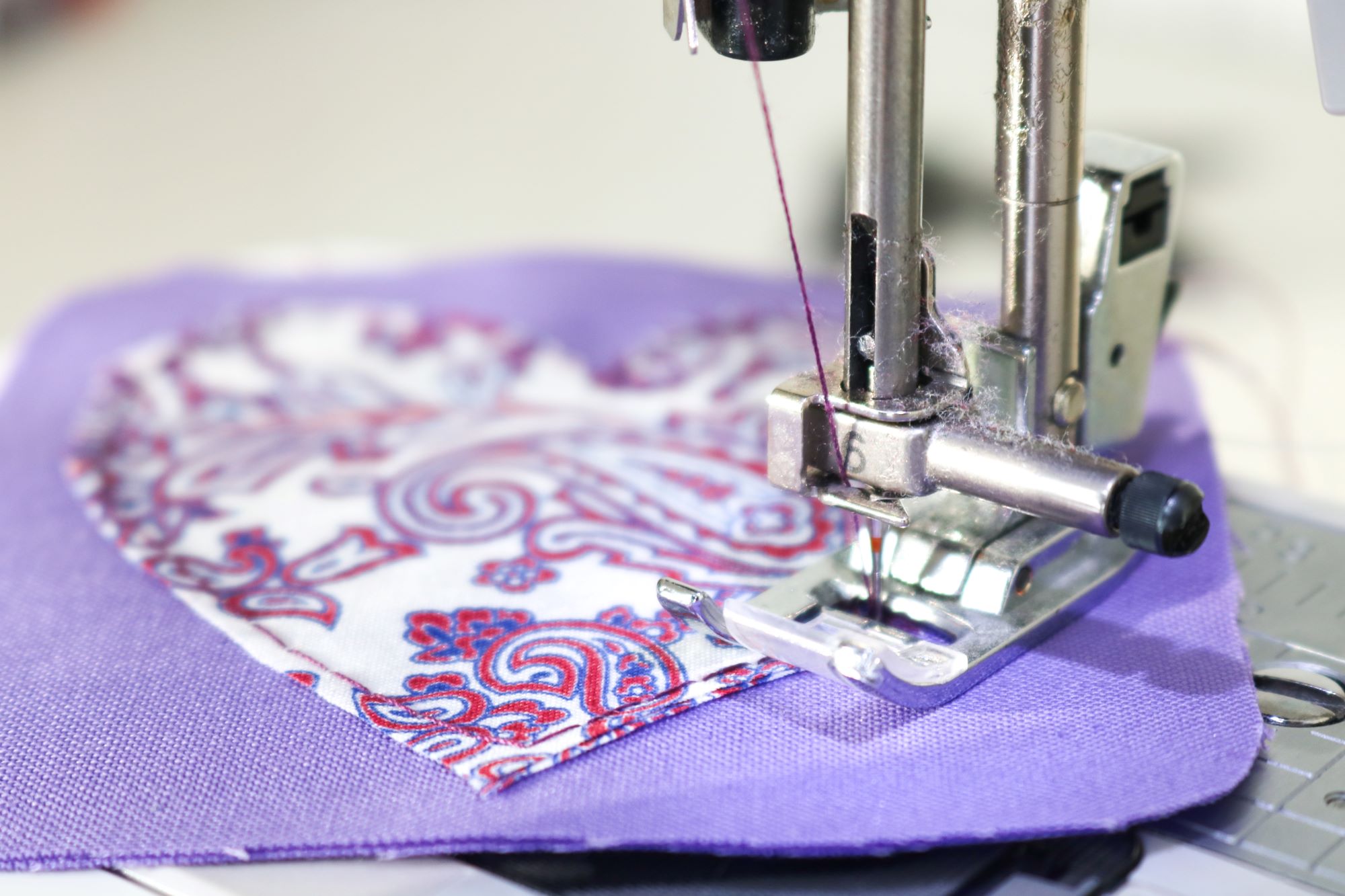
So, you finally dusted off your sewing machine (yay you!)- but now you’re staring at it like it might be able to also vacuum your kitchen and prepare you a cappuccino while you wait. 😅 What do all those knobs and levers on your sewing machine actually do?!? And do you really need to know them all before you can sew something?
The good news is: nope, you don’t need to memorise the whole instruction manual (although you should still take a look at it! 😉). But there are a few basic parts of a sewing machine that are super helpful to understand- especially if you’re just starting out.
Think of this as your “get to know you” guide for your sewing machine. Once you’re familiar with these ten parts, you’ll feel way more confident (and way less likely to scream into a pillow when your stitches go rogue).
Read on for simple, clear, and beginner-approved details of the anatomy of a sewing machine!

Disclosure: This post may contain affiliate links, meaning that I get a small commission if you decide to make a purchase through my links, at no extra cost to you.
10 Important Sewing Machine Parts That Make Everything Less Confusing
On top of all the useful sewing machine info you’ll discover in this blog post, once you’re done reading, at the very bottom of 👇 this post 👇 are a bundle more helpful articles to really get your sewing started!
1. Presser Foot

The presser foot is the little metal piece that sits below the needle. When you lower it, it presses down on your fabric to hold it steady while the machine stitches. If it’s up, the machine won’t sew properly (or at all). Most machines have a lever to raise and lower it. You’ll want to make sure it’s up while threading your machine and down before you start sewing.
Bonus: there are different presser feet for different jobs- like zippers or buttonholes. You can read more about them HERE . But don’t stress, the standard one that comes with your machine is perfect for most beginner projects.
2. Stitch Selector

This is how you choose the type of stitch your machine makes- like straight stitch, zigzag, or decorative stitches. On some machines, it’s a dial. On others, it’s buttons or even a screen.
As a beginner, you won’t need the machine with 180 types of stitches. Most likely you’ll make most use of the straight stitch and maybe a zigzag here and there (like for finishing raw edges or on knit fabrics).
Don’t be afraid to turn the dial and play around on scrap fabric. You can’t break anything by testing stitches- and it’s kind of fun to see what your machine can do! 😝 Sewing’s supposed to be fun, remember?!?
3. Stitch Length & Width

These two settings control how your stitches look.
Stitch length is how long each stitch is. Sorta like this: short 👉 —— or long 👉 – – – –.
Stitch width changes how wide a stitch is—especially noticeable with zigzag stitch. A bit like this 👉 vvvvv or this 👉 VVVVV
For most projects, a stitch length of around 2.5 or 3.0 is perfect. Longer stitches are great for basting or gathering. Once you know where to adjust these, you’ll feel way more in control of your sewing.
4. Thread Tension Dial

The tension dial controls how tight or loose the top thread is. If your fabric starts to pucker around the row of stitches, the tension is probably too tight. If you start seeing loops of spool thread on the top side of your fabric or even the spool thread peeking through on the back side the tension is probably set too loose. Either way the tension dial might need a tweak.
Start with the recommended setting for your machine (usually around 4), and only change it in small steps.
Tip: try sewing with a piece of scrap fabric and play around with the tension dial, changing it incrementally and pay attention to the differences it makes to your stitching.
5. Bobbin & Bobbin Case

Your sewing machine uses two threads to make each stitch: one on top (from the spool) and one underneath (from the bobbin). The bobbin sits below the needle plate and feeds the lower thread.
For some machines the bobbin must be dropped into place (top-loading) while others are loaded into a capsule and pushed into the lower front of the sewing machine (front-loading).
Winding and loading the bobbin can feel fiddly at first, but once you get the hang of it, it’s no big deal. Check your manual for how to make it work for your machine. If your machine starts making tangled messy stitches underneath, the bobbin is the first place to check.
6. Hand Wheel

The hand wheel is the big round knob on the right side of your machine. Turning it moves the needle up and down manually and slowly.
Use it to lower the needle carefully into the fabric at the start of a seam, or to raise the needle when you’re done sewing. (Although some modern machines will do this automatically.)
Always turn it toward you, not away. This will help prevent jams and keeps your machine happy. 😅
7. Reverse Stitch Lever

This lever (or here, my button which looks like I want to make a U-turn!)) makes your machine sew in reverse. It’s used to “lock” your stitches at the beginning and end of a seam so they don’t unravel.
Just hold it down for a couple of stitches, then let go to sew forward again. Easy, quick, and super important if you don’t want your seams falling apart after the first wash. 😉
You can learn more about backstitching HERE.
8. Feed Dogs

Feed dogs are those jagged little metal teeth under the presser foot. They move the fabric through the machine for you. That means you don’t need to push or pull the fabric- it’s already being guided as you sew.
If your fabric isn’t moving or stitches are bunching up like the machine is “chewing” your fabric, check that the feed dogs are up (some machines let you lower them for special techniques like quilting or free-motion embroidery).
9. Thread Guides (aka the path your thread must follow)

These are small metal or plastic loops and hooks that guide your top thread through the correct path. They keep tension balanced and make sure the thread moves smoothly.
Your diagrams in your sewing machine manual should show exactly where the thread needs to go. Many sewing machines even have printed numbers or arrows (on the machine itself) that’ll guide you as you go.
Threading might make you feel nervous at first, but these guides are your roadmap- and once you learn the path, it’ll becomes second nature.
Check out this quick video tutorial of threading a sewing machine!
10. Take-Up Lever

This one’s often skipped by beginners during threading—and that’s when trouble starts. The take-up lever is a little metal arm that moves up and down as you sew. It pulls the thread down from the spool and helps create balanced stitches.
You’ll thread the top thread through it when setting up your machine. If it’s not threaded properly, or the lever is down when you start threading, the machine’s gonna give you stitching headaches.
Follow the route markings for the thread on the sewing machine. (See #9 above 👆) and make sure the take up lever is up as you wind your thread through this path!
More Sewing Basics to Help You Master Sewing
✂️ Simple Bean Bags Pattern to Try Today
✂️ Dictionary of Sewing Machine Terms to Learn
✂️ How to Set up Your Sewing Machine the Right Way
✂️ How to Sew Straight Lines Every Time
✂️ Basic Sewing Questions Every Beginner Asks
✂️ Popular Sewing Questions People Also Ask Google
✂️ Surprising Sewing Lingo to Discover
✂️ Fun Beginner-Friendly Sewing Patterns
So, there you have it- basic sewing machine anatomy! 10 of the most important sewing machine parts every beginner should know! You don’t need to master every function of your sewing machine all at once, but getting familiar with these controls will make your sewing life sew 🤣 much smoother.
Start slow, play with your machine, and don’t worry if you need to look things up in the manual (we all do!). You’ve got this- now that your machine doesn’t feel quite so mysterious. 🤩
