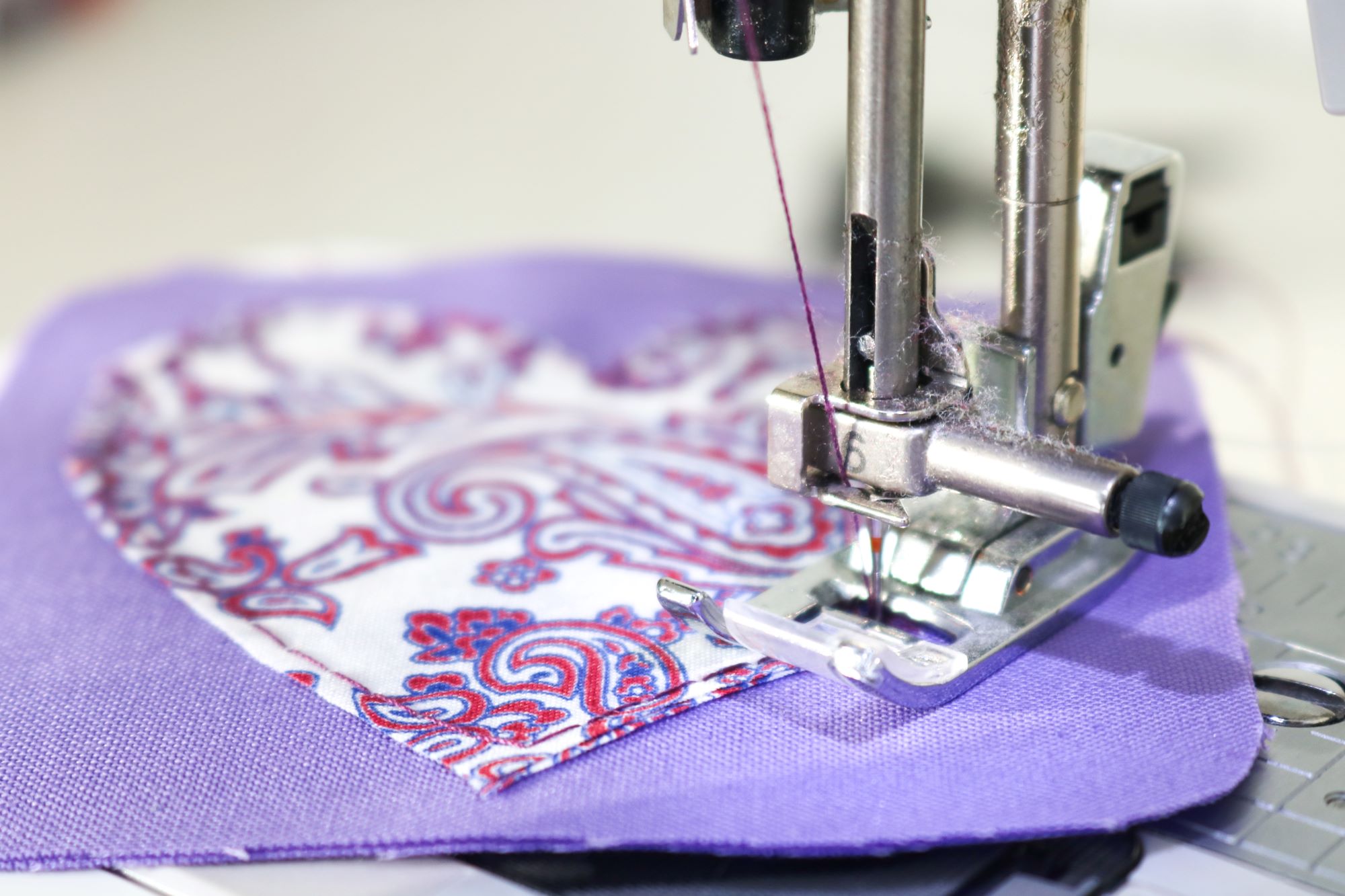
Want to learn how to sew a round fabric basket—even if you’re brand new to sewing? This beginner-friendly tutorial will show you exactly how to sew a round basket in ANY SIZE you like.
Whether you need a tiny trinket holder, a reversible basket for sewing tools, or a big soft bin for toys, this project is surprisingly simple and super satisfying.
Most fabric basket tutorials online only give you one size to follow- but as you and I both know, life (and storage!) is not one-size-fits-all. With just a little bit of math (don’t worry, I’ve done the tricky part for you), you’ll learn how to sew a round bottom fabric basket that fits your needs. And once you understand the method, you can make as many baskets as you like, in as many sizes as you like! 🤩
This is one of those “I can’t believe I made that!” kind of projects. It’s a great scrap buster, easy enough for beginners, and can be sewn in an afternoon. So, if you’re ready to sew something cute, practical, and customisable- without feeling overwhelmed by sewing lingo- this round fabric basket tutorial is for you!

Disclosure: This post may contain affiliate links, meaning that I get a small commission if you decide to make a purchase through my links, at no extra cost to you.
Before you get started, I also have an easy-to-follow sewing tutorial for creating a cube-shaped fabric basket in whatever size you’d like. You can find all the details for that variation 👉 HERE 👈.
Supplies You’ll Need to Sew Your Round Basket

📌Outer fabric- a woven (non-stretch) fabric works best. Think quilting cotton, canvas, denim, home decor fabrics… 😉 You could even use any scrap fabrics you have lying about.
📌 Lining fabric- again, a woven fabric. You could use the same as for the outer fabric, or another complimentary design or something completely wild and contrasting!
📌 Interfacing- for structure and stability. Interfacing can be “fusible” (meaning you can iron it to attach it to your fabric) or regular (best attached to your fabric to hold it in place using a long “baste” stitch).
📌 Thread- decide whether you want it to blend in with your fabrics or use a contrasting colour.
📌 Fabric scissors or rotary cutter. To cut out the circle I even used a special tool that works a bit like your kid’s geometry compass.
📌 Ruler or measuring tape.
📌 Pins or clips to hold your fabric pieces together.
📌 Fabric marking pen or tailor’s chalk.
📌 Sewing machine
📌 Iron- for pressing seams and fusible interfacing.
Optional: To cut out the circle I even used a special tool that works a bit like your kid’s geometry compass, but with a sharp blade. 😅
How to Figure Out Your Basket Measurements
No need to follow a tutorial that only shows you one fixed basket size to make. Your sewing projects should fit in with your life and needs, just the way you want!
For this project you’ll need two shapes for each basket:
- A circle for the base
- A rectangle for the sides
Now, you could just trace around a round object that you already have at home, such as a bowl, glass, or plate in the size you’d like, to use as the “base” of your basket.
Alternatively, decide what size circle basket you’d like to create. The important number you’ll need in the next steps is how wide it should be.
Here’s how to calculate the side piece to match the base size you want:
Step 1: Decide how wide you want the basket to be.
That’s your base diameter. For example, I will be making a basket with a 20 cm (approx. 8”) base.
To this, you’ll need to add on a 1 cm (3/8”) seam allowance around the entire circle. That would make the fabric needed for the base to be 22 cm across (approx. 8 5/8”).
Step 2: Next, to calculate the width of the rectangle panel that will form the sides of the basket, use this formula:
Diameter × 3.14 (that’s pi, for you math fans 🤣) = side panel width
For example: 22 cm × 3.14 = 69.8 cm (approx. 27 ½”) wide

Step 3: Decide how tall you want your basket.
That’s the height of your side panel. I want my fabric basket to be 13 cm (approx. 5”) high.
So, the rectangle would be 13 cm tall by 69.8 cm wide.
☝️ But don’t cut anything yet!!
Step 4: Now you’ll need to add on seam allowances to the side piece of the basket!
- 1 cm (3/8”) seam allowance to the height, along each of the top and bottom long edges of the rectangle
- 1 cm (3/8”) seam allowance to the width of the rectangle at each end
✅ Final pattern size in this fabric basket example:
13 cm tall + 1cm + 1cm (height) by 69.8 cm + 1cm + 1cm (width) =
✨ 15 cm by 71.8 cm (approx. 5 7/8” by 28 ¼”) ✨
How to Easily Sew a Round Fabric Basket (DIY Any Size You Like!)
Here’s how to bring it all together, step by step:
Step 1: Cut out and prepare your fabric pieces
Based on your calculations from above, you’ll need:
- 1 circle from outer fabric
- 1 circle from lining fabric
- 1 circle from interfacing
- 1 rectangle from outer fabric
- 1 rectangle from lining fabric
- 1 rectangle from interfacing

Attach the interfacing to the wrong side of either the outer fabric circle or the lining fabric circle. Because this basket can be reversible, it kinda doesn’t matter which one you choose. 😉
If using fusible interfacing, iron it onto the wrong side of the circle fabric piece. If using the non-fusible sort, attach it to the fabric using a long (“baste”) stitch.
Repeat this with the rectangle piece of the same fabric. ie interfacing pieces attached to both the circle and rectangle of the outer fabric or attached to both of the lining fabric pieces.

Step 2: Sew together the basket outer fabric pieces
Fold the outer fabric rectangle in half so that the 2 short sides meet, right sides together. Sew those short ends together with a 1 cm seam allowance to make a loop. Use your iron to press open the seam.


Pin the outer fabric base circle to one long side of the loop, right sides together. Use plenty of pins or clips to as you work around the curve of the circle. (This step might take a while. 😅)
Tip: you might find it helpful to “divide” each piece into quarters and use pins to mark these. Use these points as a guideline when aligning the circle and rectangle pieces together
Sew around the base to the sides with a 1 cm seam allowance.
Step 3: Sew the lining basket fabric pieces
Simple repeat the procedure shown in Step 2 to create the lining basket pieces. 💪


You will now have 2 separate basket pieces- one of the lining fabric and one made with the outer fabric.

Step 4: Join the 2 baskets together
Turn the outer basket out the right way. Turn the lining basket inside out, so the “right side” of the fabric is now facing inwards.
Place the outer basket inside the lining basket, right sides facing each other. Line up the side seams and top edges.
Pin or clip all the way around the top rim.
Mark an approximately 7 cm (approx. 3”) gap along the top edge for turning the basket out the right way in a moment.

Sew these 2 basket pieces together around the top using a 1 cm seam allowance. ☝️ Remember to leave that gap unstitched!

Step 5: Turn and finish your reversible, round fabric basket!
Carefully pull the entire basket right side out through the opening in the top seam.


Tuck the lining down inside the outer basket and use an iron to press the top edge neatly, making sure the seam allowance at the gap is folded down in between the 2 fabric layers.


Top stitch close to the fabric edge around the entire top rim of the basket, closing the gap as you go and giving the basket a polished finish. ✨

🎉 And that’s it! You’ve just sewn a round fabric basket that’s completely customised to your size needs and style- no pre-sized patterns needed. Brilliant!


More Sewing Tips You Can Use!
💥 How to Sew a Fabric Box in Any Size
💥 How to Easily Set Up Your Sewing Machine
💥 Be in the Know with Sewing Lingo
💥 Useful Beginner Sewing Skills to Practice
💥 Sewing Machine Parts You Need to Know
💥 Simple PDF Patterns to Get You Excited About Sewing
Now that you know how to sew a round fabric basket in any size, the possibilities are truly endless. Whether you’re organizing your sewing supplies, gifting something handmade, or finally using up those beautiful fabric scraps, this project is a quick, satisfying win—even if you’re a total beginner.
Once you’ve made one reversible basket, you’ll be hooked. So go ahead—grab your favourite fabrics, pick your perfect size, and start stitching your way to stylish, custom storage!
